Practical manual · Lifts
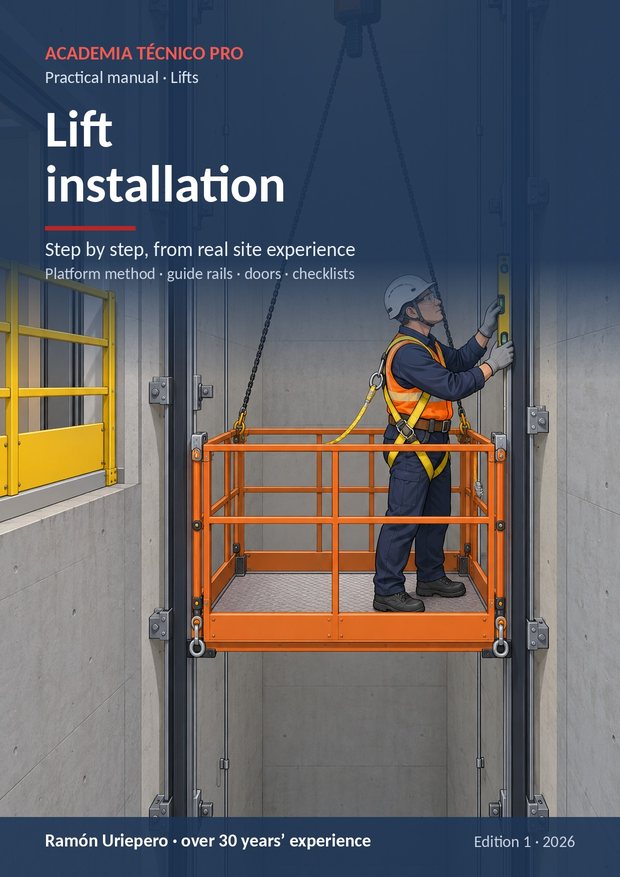
Lift installation – step by step
The platform method explained from real on-site experience: from setting out with plumb lines to landing doors plumbed floor by floor and the checks before commissioning.
What’s inside
The complete mechanical installation and basic shaft wiring of an electric traction lift, with or without a machine room, in the order it is done on site. No brands: the criteria and working sequence that apply to any installation.
- Step by step: what to do, in what order and why.
- Checklists for every phase and a final sheet for the site file.
- Common mistakes that you pay for later in ride quality or at the doors.
- Safety: rigid guardrails, harness always anchored, lock-out and the golden rule: never climb the structure.
- Platform vs scaffolding: what changes and what doesn’t.
Who it’s for
Fitters and improvers starting out, service technicians who want to understand how the equipment they repair is put in, and electricians and industrial technicians joining the trade. It is a practical guide to method: it does not replace the manufacturer’s instructions or the regulations (EN 81-20 / EN 81-21 and local rules).
Contents
- Site preparation and safety: receiving materials, shaft survey, measurements and protection
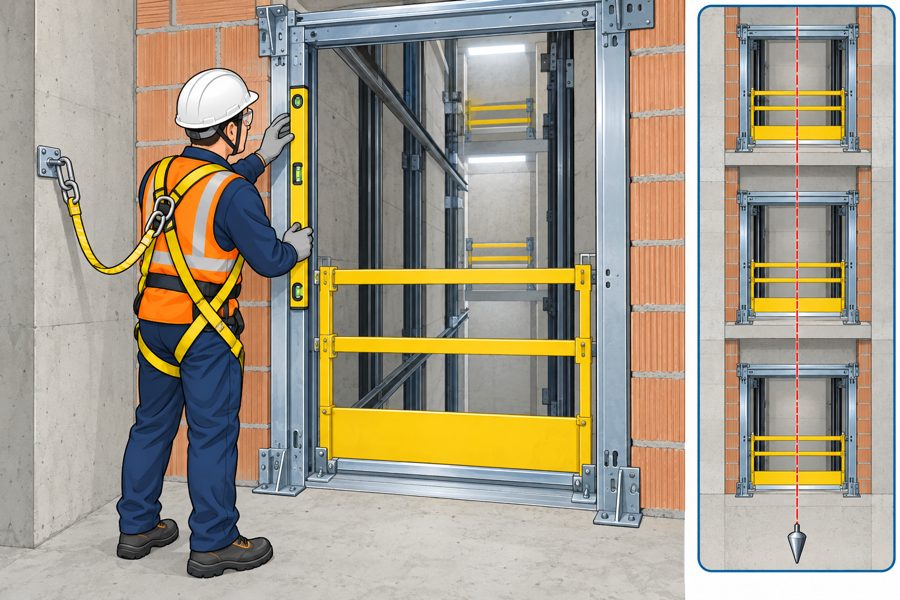
- Setting out with plumb lines
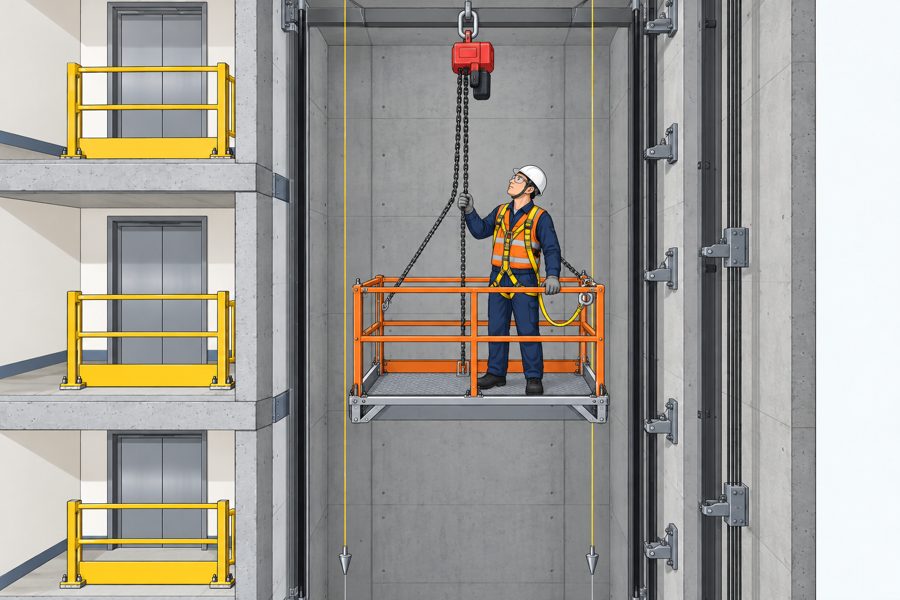
- Hoist and installation platform
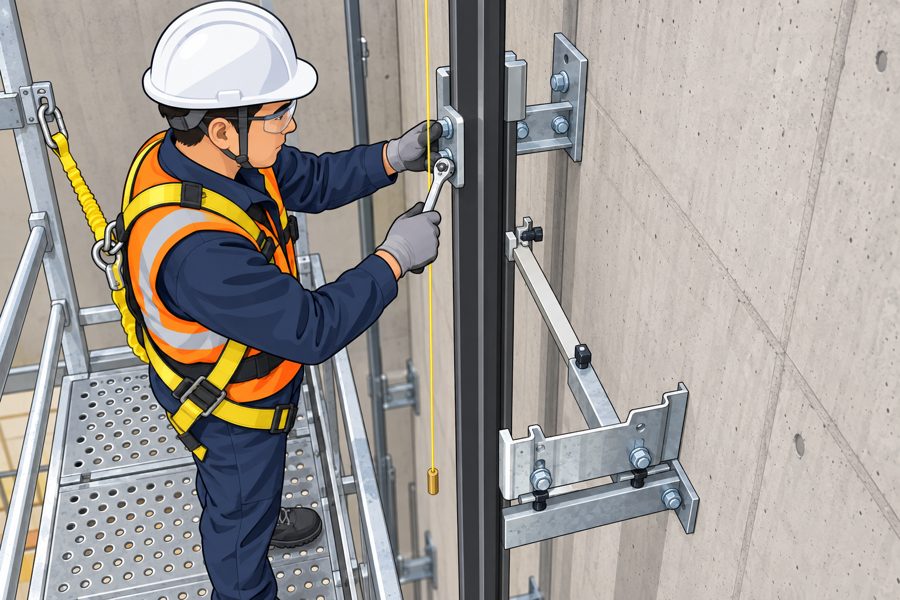
- Guide rails: starting in the pit, brackets, alignment and indicative tolerances
- Car frame and car
- Counterweight
- Machine and ropes (machine room and MRL)
- Landing and car doors, plumbing and finishing
- Basic shaft wiring
- Checks before commissioning
- Platform method vs scaffolding method
- Final checklist and glossary
A few illustrations from the manual
⚠️ Safety first
- Lift installation is carried out only by qualified and authorised personnel, always at least two people.
- Collective protection first: rigid guardrails (top rail ~1100 mm, mid-rail and toe board) at every shaft opening.
- Harness with lanyard always anchored to a sound point; never climb rails, brackets or the structure.
- Never work under a suspended load; lock out before any electrical work.
The academy’s content is for guidance only and does not replace the manufacturer’s instructions, local regulations, the documentation of each installation or official training.